Call us for help on

Why are prices increasing?

Why are prices changing from 1 April 2026?

From 1 April 2026, electricity lines charges for consumers in the Kāpiti and Horowhenua regions will change. While we work hard to keep energy affordable, we must ensure we can continue to safely and reliably operate the network as our community grows.

The average overall increase in line charges is approximately 10%. This includes  increases in transmission charges from Transpower, increases in operating costs that Electra faces, as well as funding investment in the network and making a fair return on those investments.  The changes to pricing this year include a 66% increase in the annual discount Electra pays to its consumers. 

What does my price include?

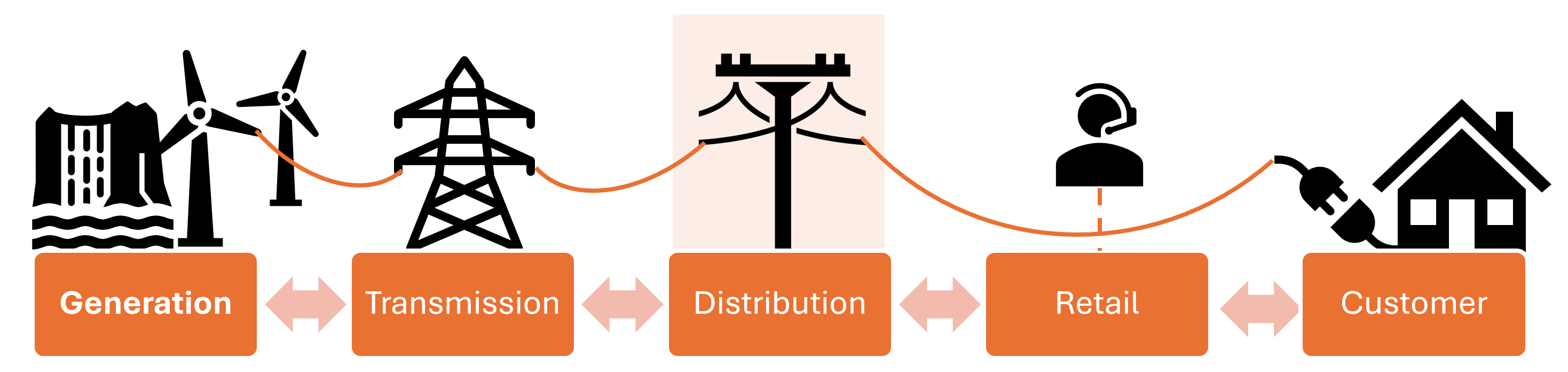
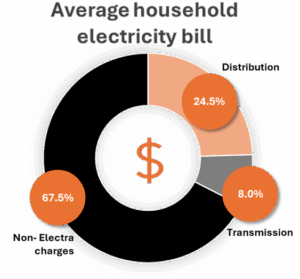
Your electricity bill from your retailer is made up of several parts. Electra only controls the Distribution portion.

  • Distribution (Electra): This covers the cost of owning and maintaining the local lines, cables, transformers, and poles that deliver electricity to your door.
  • Transmission (Transpower): This is the cost for the national grid to transport electricity from generating stations to our local network.
  • Generation and Retail: The largest portion of your bill (typically over 67%) is set by your electricity retailer and covers the cost of the electricity you use, retail services, metering, government levies and tax.
What has caused the increase in prices this year?

Prices have increased by 10% because our target revenue for the year starting 1 April 2026 has increased by 13%. The primary reasons for this change are:

  • Higher Pass-Through Costs: Transmission charges from Transpower have increased by 17%. These are costs for the national grid that we pass through to consumers without any markup.
  • Increased Distribution Costs: Distribution costs have increased by 12%, which covers the increasing costs of operating and investing in our network to ensure it remains safe and reliable. After discount, the distribution cost increase is 5.2%.
  • Increased Discount: With the distribution cost increase this year, the total discount pool has been increased by 66% to $9.15 million. This reflects our decision to strengthen the annual discount we return directly to households and businesses ensuring more value flows back to consumers for their investment in our region and recognises the value of local ownership. This approach guarantees that every eligible consumer receives their full entitlement, rather than expecting retailers to pass through lower prices specific to the Kāpiti Coast and Horowhenua.
Table 1: Breakdown of revenue change by component

 

How have prices changed?

We’ve made structural changes to our pricing to simplify our options and improve transparency:

  • Mandatory Time of Use (TOU): If you have a communicating smart meter, you should now be on a TOU plan. This allows you to pay much lower prices for using electricity during off-peak times.
  • Removal of the ‘Shoulder’ Period: We’ve simplified our pricing by removing the shoulder period. These hours are now charged at the lower Off-Peak rate.
  • Weekends are now Off-Peak: Because the network is not under pressure on weekends, we are now charging every weekend, all weekend, at the lower Off-Peak rate.
  • Export Rebates: If you have solar panels, we have introduced a new rebate for electricity you export back to the network that helps us manage the network during peak winter periods.
  • Low User Daily Fixed Charge (LFC): the daily fixed charge for Low Users has increased to 90 cents per day following the last stage of the LFC regulation phase out.
  • Segmented Commercial & Industrial (C&I): Prices for our largest network users have been spilt into four groups based on their consumption size, so we can better reflect the costs we face in supplying electricity to them. Larger consumers tend to have less variable annual usage, so we have set lower variable rates, and set higher daily fixed charges.

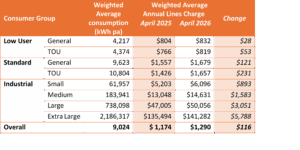
How much is the price I pay expected to change by?

The actual impact on your bill depends on four main things:

  1. your specific consumer group,
  2. how much electricity you use,
  3. when you use it, and
  4. how your retailer choses to pass our charges through to you.
Table 2: Price Changes by Consumer Group (post-discount)
Our Pricing Schedule provides more information on individual tariff options.

Our Pricing Methodology provides more information on how our prices reflect your electricity use.
Frequently Asked Questions

When will the prices I pay change?

Your electricity retailer must provide one month’s notice to change your prices. Although they are not required to pass through our line price changes, most retailers will periodically review their charges to ensure they reflect changes across the electricity supply chain. A change to the rates you pay can include a combination of changes in the cost of generation, retail, levies and line charges.

Why does my price change differ from the average?

The overall impact of our pricing changes on your electricity bill will depend on a few things, such as how and when you use our network and how your retailer chooses to structure the prices they charge you. Our weighted averages provide a guide for the average user. Consumers that consume below average volumes of electricity on controlled tariffs, and or outside of peak periods, should expect less of an increase in network charges and vice versa.

When and how will I get my price discount?

This is provided to your retailer in late February. You can learn more about our Price Discount and your eligibility here.

Who can help me understand my electricity account and usage?

Your electricity retailer can discuss your current pricing plan with you and confirm you’re on the best option for your needs.

Powerswitch also provide a free and independent service that allows you to compare your current pricing plan and provider against other electricity retailers.  You can visit www.powerswitch.org.nz 

Energy Efficiency and Conservation Authority (EECA) is a government agency responsible for promoting energy efficiency and conservation. They provide co-funding and support for individuals, businesses, and large energy users  Co-funding and support | EECA

I’m experiencing hardship, who can help me pay my bill?

Powerswitch is a great starting point to ensure you are on the lowest possible rate for your energy needs.

The Ministry of Business, Innovation and Employment are supporting low electricity-use households finding it hard to pay their power bills as the Low Fixed Charge tariff regulations are phased out through the Power Credits Scheme.

Work and Income also provide extra payments for beneficiaries to help with energy costs from May to October every year, through their Winter Energy Payment scheme.

There are other organisations that can help too. In the Horowhenua and Kāpiti regions we have Energymate, Levin Budget Services, and MoneyTalks.

What is your complaints process?

Our consumers have the right to always expect quality service and support from us. If you have a complaint or problem, including land issues, we want to know so that we can fix it.

A quick chat with a staff member at Electra is often all that is required to resolve your concern. Call us on 0800 Electra (0800 353 2872) between 8am – 5pm on weekdays and ask to speak with our Customer Experience team. We endeavour to resolve all formal complaints within a period of 20 days.

If we do not resolve your complaint to your satisfaction, we are a member of the Utilities Disputes Scheme, a free and independent service for resolving complaints about utility providers. You can contact Utilities Disputes at 0800 22 33 40 or go to Utilities Disputes.


Source: Electricity Authority data